Lewis Dual Sector Model
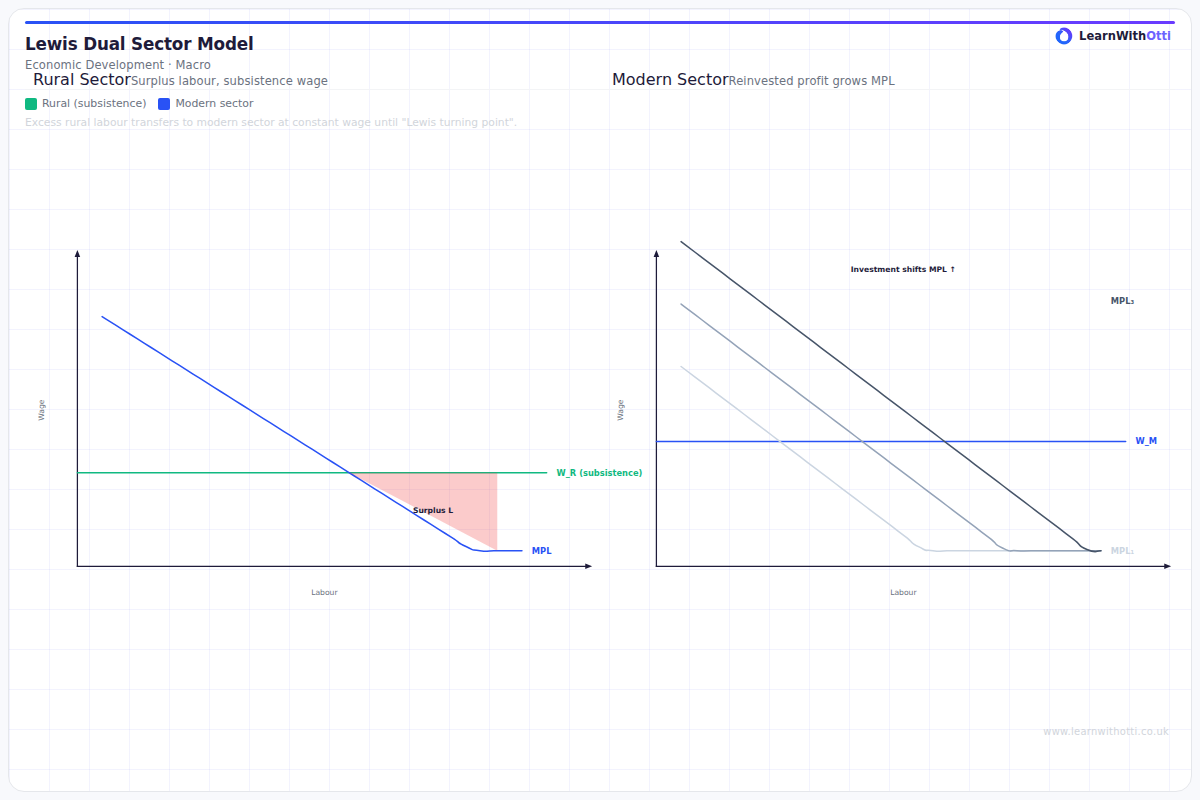
Diagram illustrating the Lewis two-sector model of development: surplus labour moves from the traditional agricultural sector to the modern industrial sector, driving growth.
Printable preview
Download a static PNG of this diagram to print or include in revision notes.
Download PNGWhat this diagram shows
The Lewis Dual Sector Model shows how developing economies transition from agriculture-based to industrial economies through labour migration between two distinct sectors. The model demonstrates how surplus labour in the subsistence agricultural sector (where marginal productivity is zero or very low) can be transferred to the capitalist industrial sector where it's more productive. This creates economic growth as workers move from low-productivity farming to higher-productivity manufacturing jobs. The model helps explain the structural transformation that many countries experienced during industrialisation.
Key points
- Two sectors: subsistence agriculture (traditional) and capitalist industry (modern) with different productivity levels
- Surplus labour exists in agriculture where workers contribute little to no additional output
- Labour migrates from agriculture to industry, attracted by higher wages and better opportunities
- Industrial sector reinvests profits to expand, creating more jobs and continuing the cycle
- Eventually surplus labour is absorbed and wages begin to rise in both sectors (Lewis turning point)
Exam tip
Examiners are impressed when students clearly distinguish between the two sectors and explain the movement of labour from subsistence agriculture to industrial manufacturing. Many students wrongly assume this model applies to all developing countries today - always evaluate its relevance to modern economies with service sectors.
Common mistakes
Students often forget to explain that agricultural productivity doesn't fall when workers leave the subsistence sector, which is the key insight about surplus labour. They also frequently confuse this with simple rural-urban migration without understanding the productivity differences between sectors.
Exam board notes
All major exam boards treat this diagram identically, though OCR and CIE tend to ask more evaluative questions about its limitations in modern service-based economies. AQA and Edexcel focus more on the mechanics of labour transfer between the two sectors.
Related diagrams
Ask Otti about this diagram
Our AI tutor can walk you through every curve, explain exam technique, and quiz you on it.